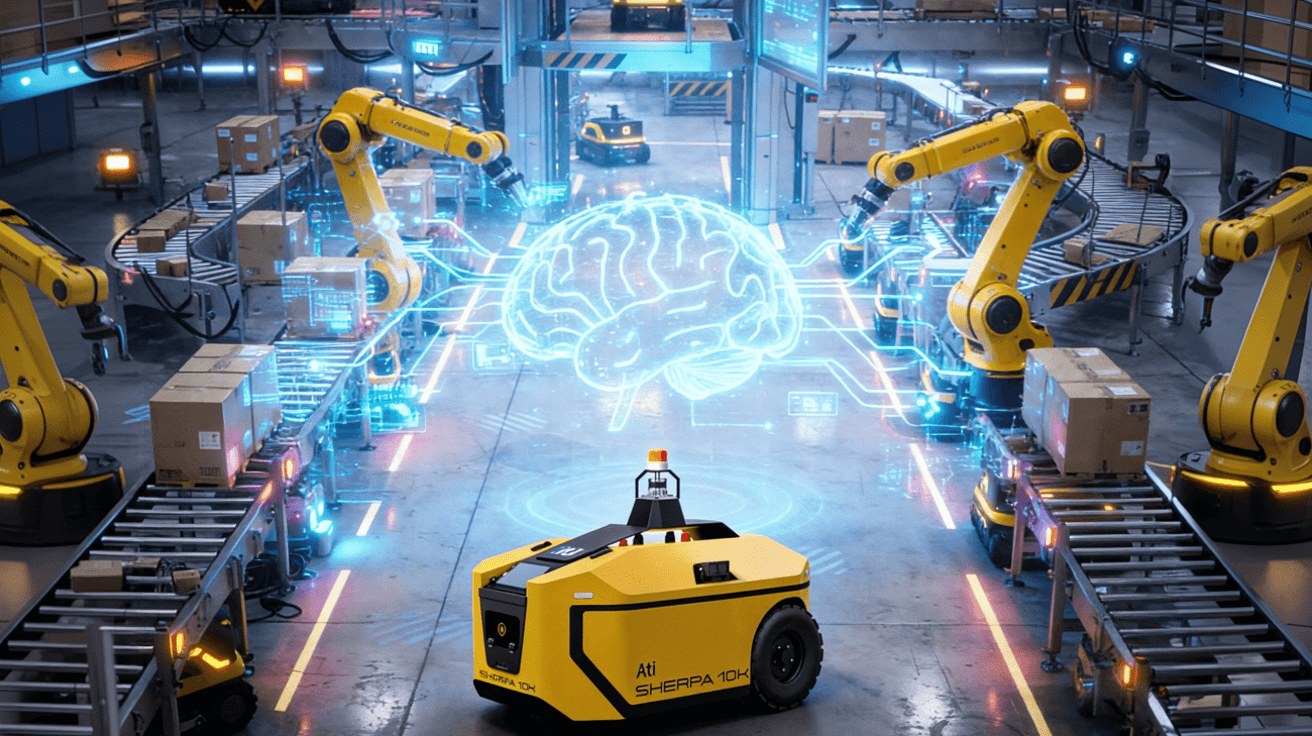
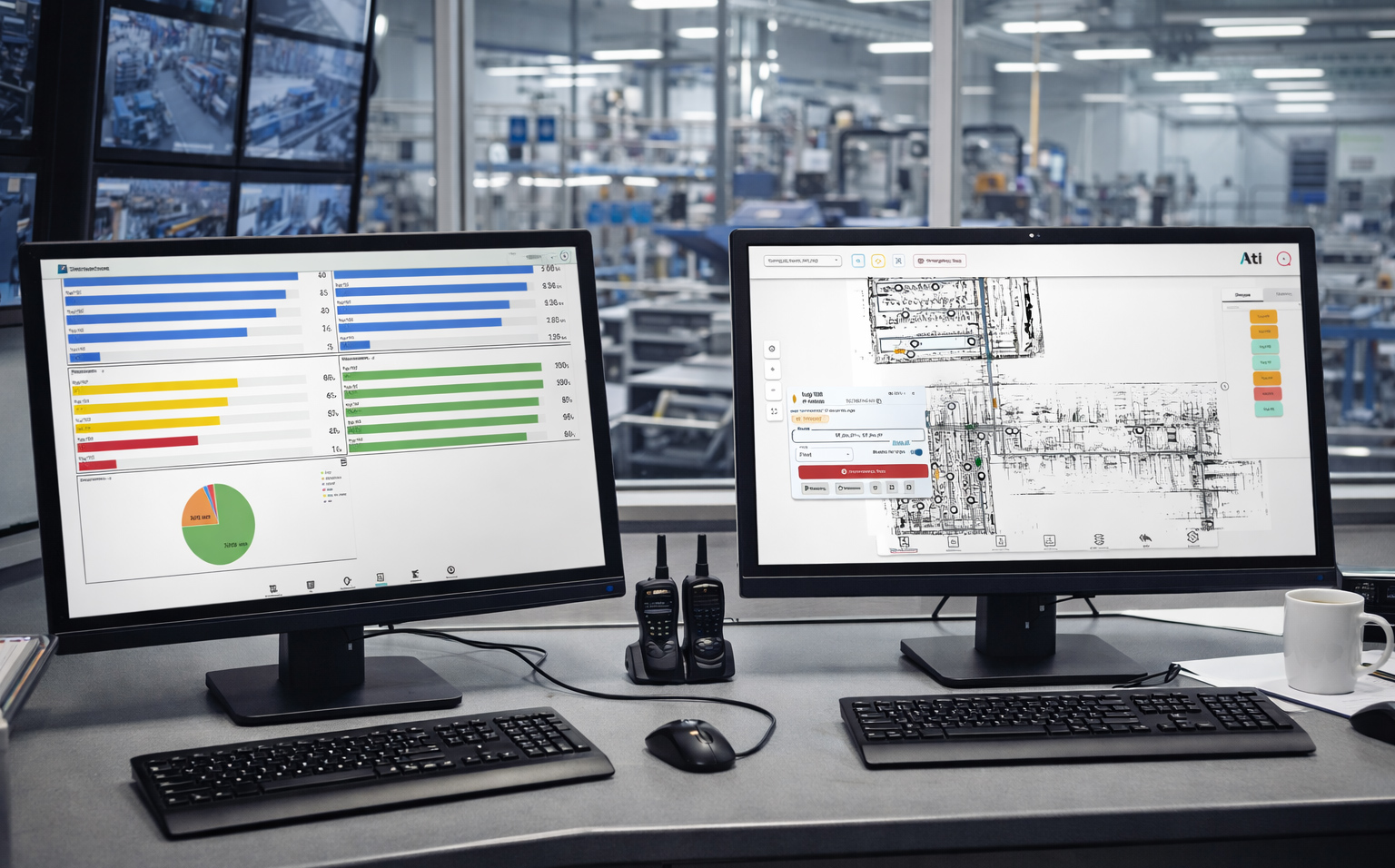
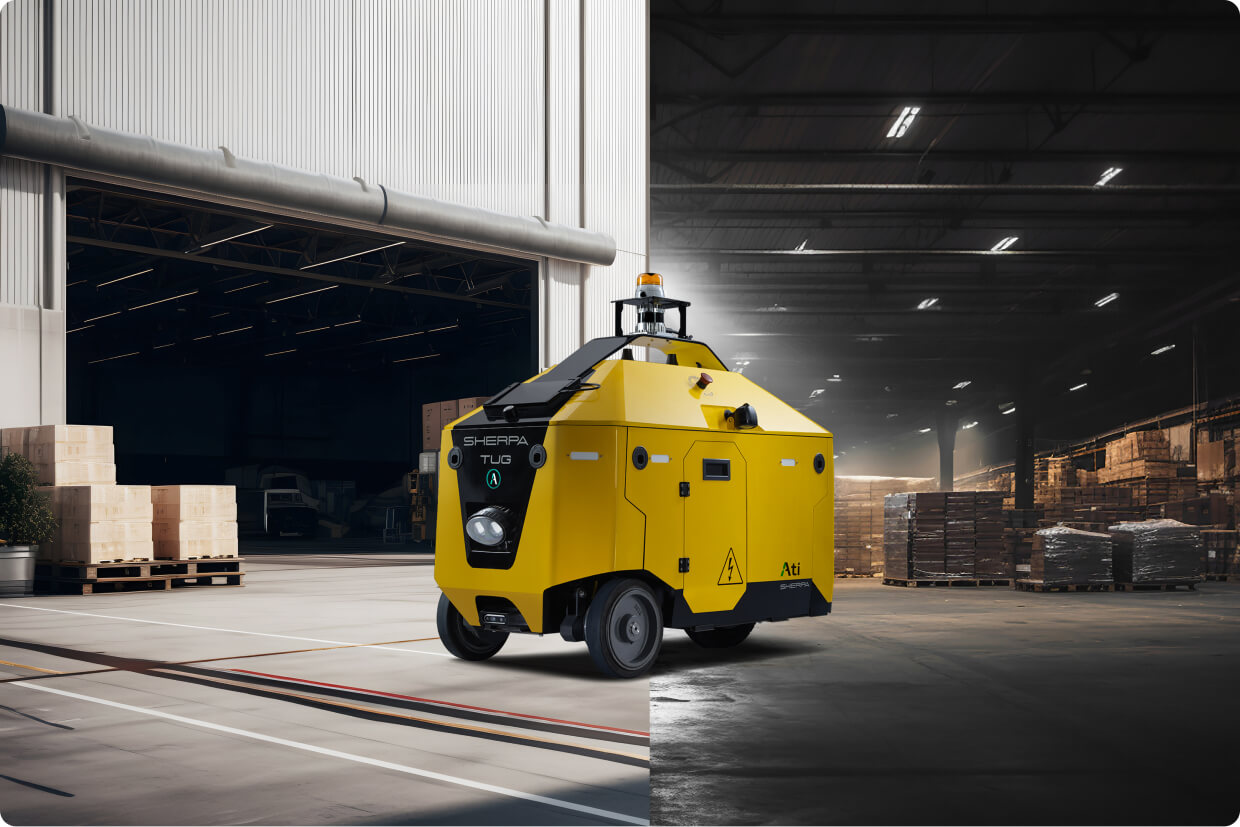
These are not concepts. Each flow below is live in production at global manufacturing sites, coordinating material movement every day.
01 / Multi-FloorAMR Lift Integration
Most factories lose efficiency because robots are trapped on a single floor. Material Tracking System lets AMRs autonomously call elevators through direct lift-controller integration, move between levels, and coordinate with other fleets. A multi-floor facility becomes one unified operational space.
What ChangesZero wait time for lifts, seamless multi-floor workflows, and the end of per-floor fleet silos.
02 / Floor VisionAti Eye Safety Layer
Ati Eye uses overhead cameras to build a real-time digital twin of the floor, tracking AMRs, forklifts, humans, obstacles, and traffic patterns. Material Tracking System uses that feed to prevent deadlocks, resolve congestion before it forms, and keep human-robot coexistence safe.
What ChangesProactive congestion resolution, safer human-robot coexistence, and data-driven layout optimization.
03 / Operator DispatchPush-Button AMR Call
A wired remote with a dispatch and summon button gives operators a physical, one-touch way to call an AMR. They select a task on a dial, press the button, and Material Tracking System interprets the input, assigns the right robot, and sends it to their location automatically.
What ChangesOperators never navigate screens or menus. Robot calls become as simple as flipping a switch.
04 / Access ControlSmart Shutter Automation
Smart shutters open automatically as AMRs approach, authenticate access using LiDAR, RFID, or vision systems, and close immediately after. Material Tracking System manages the handshake so restricted zones stay secure without slowing material flow.
What ChangesZero manual door operation, faster transit through secure areas, and stronger AMR safety at restricted zones.
05 / Fixed + MobileConveyor-to-AMR Handoff
Material Tracking System unifies conveyors and AMRs by watching conveyor sensor events and automatically dispatching the right robot when material reaches an endpoint. Pickup timing is synchronized, so material never stacks up and nothing stalls.
What ChangesManual dispatch calls disappear, conveyor blockages drop, and handoffs become invisible to operators.
06 / Shared ZonesAMR and Forklift Traffic Control
In shared travel zones, Material Tracking System controls traffic lights based on active AMR routes, and signals workers and forklifts when robots are approaching. Right of way becomes predictable, not reactive.
What ChangesFewer near-miss incidents, clear visual cues for human workers, and smoother coexistence at high-traffic crossings.
07 / ERP IntegrationAutomated Replenishment
Material Tracking System listens to real-time consumption data from SAP and other ERPs via API, and automatically triggers AMR replenishment tasks the moment a line needs material. No tickets, no phone calls, no stockouts.
What ChangesFully autonomous material replenishment, tight sync between production and logistics, and no manual picking requests.
08 / TraceabilityBarcode Verification
Operators scan barcodes at pickup and delivery. Material Tracking System cross-checks every scan against WMS and ERP records in real time, preventing wrong deliveries and producing a full digital audit trail of every move.
What ChangesMispicks disappear, every move is auditable, and material accuracy stops depending on manual checks.